
Larmine Guide
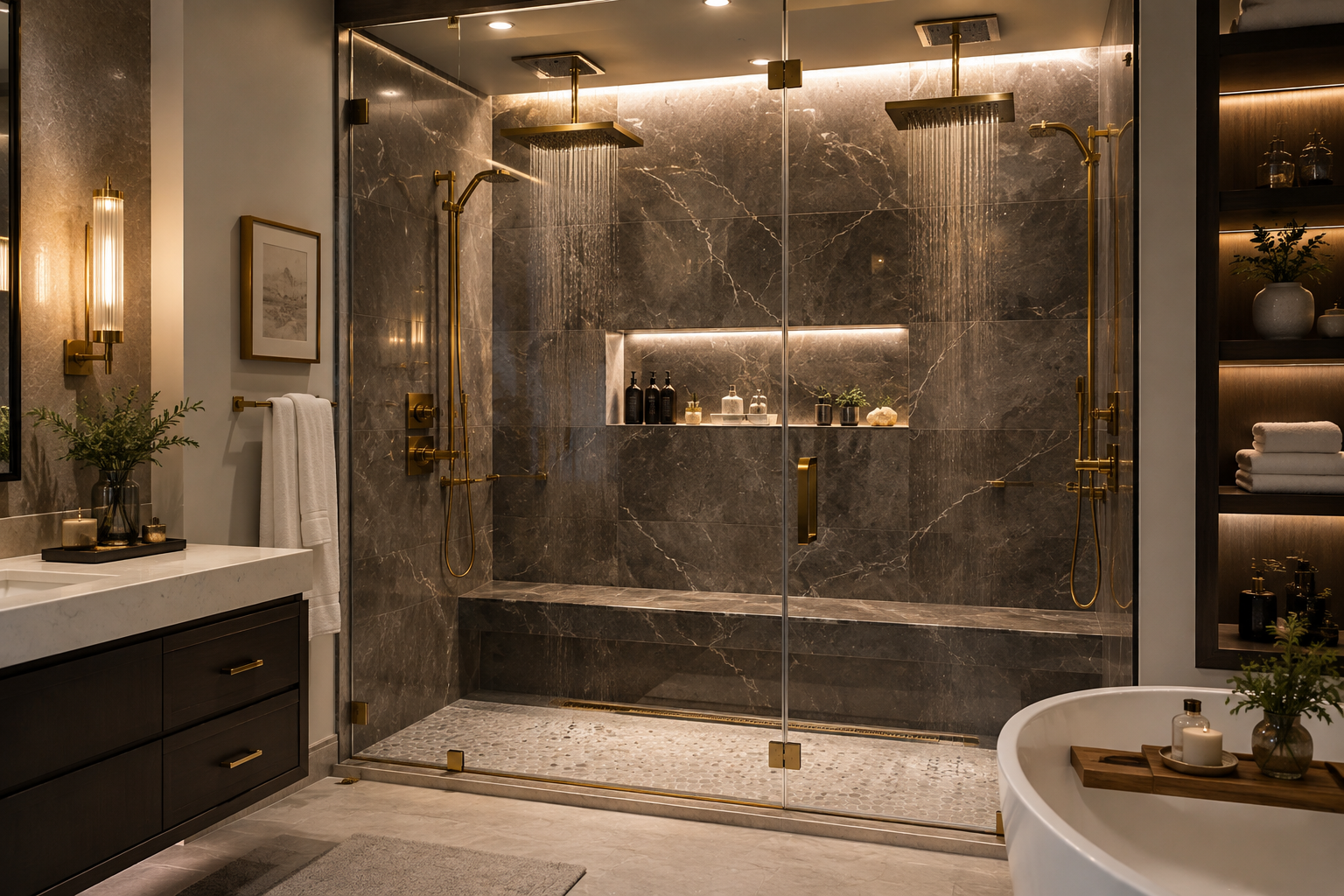
Luxury Shower Ideas for a Calm, Spa-Inspired Bathroom
A practical design guide to layout, materials, lighting, storage, fixtures, and details that make a shower feel refined without sacrificing everyday function.
Published August 5, 2026 · Reviewed by the Larmine Editorial Team
A luxury shower is less about adding the most expensive finishes and more about creating a space that feels intentional. Comfortable proportions, reliable shower waterproofing, easy-to-clean surfaces, flattering light, and controls that work naturally can make a modest shower feel more premium than a larger but poorly planned one.
This guide focuses on design decisions you can evaluate before selecting products. For structural changes, waterproofing, plumbing, electrical work, permits, or accessibility requirements, consult appropriately qualified professionals and follow local codes and manufacturer instructions.
Table of contents
1. Plan the layout before choosing finishes
Begin with clearances, entry, plumbing locations, ceiling height, ventilation, and the way the shower will be used. Use Larmine’s bathroom exhaust fan size calculator and selection guide to establish a starting airflow and review duct and placement considerations. A door should not collide with a vanity, toilet, towel hook, or another person. Controls should be reachable without stepping directly under cold water, and frequently used items should not require awkward bending or stretching.
Walk-in, enclosed, or tub-and-shower?
A walk-in design can feel open and architectural, but it needs enough depth, glass, drainage planning, and heat retention to control splashing and drafts. A fully enclosed shower generally contains water and warmth more predictably. A tub-and-shower combination can remain the most practical choice for a compact bathroom or household that needs a tub.
Consider accessibility early
A low or curbless entry, appropriately positioned controls, secure blocking for future grab bars, a handheld shower, slip-conscious flooring, and a useful seat can improve comfort for many users. These features are easier to integrate during planning than retrofit later.
2. Choose calm, durable materials
Luxury often comes from restraint. A limited material palette allows texture, proportion, and craftsmanship to stand out. Warm stone tones, soft white, beige, muted gray, navy accents, and brushed metal can create depth without visual noise.
Large-format surfaces
Larger tiles or panels can reduce grout lines and make a shower feel quieter. They require a suitably prepared substrate and careful installation. Natural stone can be beautiful, but porosity, sealing, staining, and approved cleaning products should be considered before committing.
Flooring and slip resistance
The shower floor needs both drainage and dependable footing. Smaller tiles can follow the slope more easily and provide additional grout lines, while some textured porcelain products are designed for wet environments. Verify the manufacturer’s intended application and applicable slip-resistance information.
Grout color and maintenance
A grout tone close to the tile creates a seamless effect and is often more forgiving than stark contrast. Ask the installer about grout type, joint width, sealing, curing, and cleaning requirements. Easy maintenance is a premium feature.
3. Select fixtures around daily use
Start with water pressure, hot-water capacity, plumbing compatibility, household preferences, and local efficiency requirements. If the shower feels weak, use Larmine’s guide to choosing a showerhead for low water pressure to separate supply pressure, delivered flow, restrictions, and spray feel before selecting fixtures. A complex system with multiple outlets may require plumbing changes and more hot water than expected.
Overhead and handheld combination
An overhead shower creates a relaxing experience, while a handheld unit improves rinsing, cleaning, bathing children, and accessibility. For many households, a well-planned combination offers more practical luxury than multiple decorative sprays.
Thermostatic controls
Compatible thermostatic controls can help maintain a selected temperature when water conditions change. Confirm valve compatibility, service access, flow requirements, and local installation rules with a qualified plumber.
Choose a finish you can maintain
Polished finishes can look formal but show water marks more readily. Brushed finishes often feel softer and may be more forgiving. Check cleaning restrictions and use the same finish family intentionally rather than assuming every manufacturer’s “brushed brass” or “matte black” will match.
4. Layer lighting carefully
A shower should feel bright enough for safe use without resembling a utility space. General bathroom lighting, approved wet-location shower lighting, vanity lighting, and optional low-level night lighting can each serve a different purpose. A warm-neutral color temperature often supports a calm atmosphere while still rendering finishes clearly.
Electrical fixtures and controls must be properly rated and installed for the location. Decorative niches or under-bench lighting require particularly careful waterproofing, access, and electrical planning.
5. Build in quiet, useful storage
A clutter-free shower feels more luxurious, but storage needs to match real routines. Inventory the bottles, tools, and personal-care items that will live there. A niche should be large enough for the tallest item, sloped correctly for drainage, and positioned away from the strongest spray when possible.
A ledge can offer flexible storage and reduce the number of waterproofing interruptions. A bench can support bathing, shaving, and accessibility, but it needs comfortable proportions, drainage, and a surface suited to wet use.
6. Add premium finishing details
- Clear glass: keeps the room visually open, while low-iron glass can reduce a green cast at a higher cost.
- Minimal hardware: allows tile and proportion to remain the focus, provided the enclosure is properly engineered.
- Warm towels: a correctly specified towel warmer or conveniently placed hook can improve comfort more than another decorative feature.
- Consistent edges: thoughtful tile profiles, miters, trim, and aligned joints create a finished appearance.
- Ventilation: a properly sized, correctly vented exhaust system helps manage moisture and protect finishes.
What to consider buying
Affiliate disclosure: Larmine may earn a commission from qualifying purchases when eligible affiliate links are added. This guide currently contains no affiliate product links. Learn more.
Best for flexible daily use: a compatible shower-and-handheld system
Look for clearly documented flow rates, an easy-to-grip handheld unit, a secure slide bar or holder, readily available replacement parts, and controls that can be operated comfortably. Confirm that the valve, trim, outlets, and rough-in components are designed to work together.
Best for a clean visual line: a properly sized fixed glass panel
A fixed panel can reduce visible hardware, but sizing must control spray and account for entry width, drafts, and cleaning access. Professional measurement and installation are usually worth prioritizing.
Best for organized storage: a recessed niche or continuous ledge
Choose the approach during the waterproofing plan, not after tile work begins. Location, framing, waterproofing transitions, drainage, and finished dimensions are more important than decorative accessories.
Alternatives for a smaller budget
Keep the existing layout when it functions well, choose one high-impact fixture upgrade, use a restrained porcelain tile, improve lighting, replace worn seals and hardware, and add well-positioned storage. Fewer coordinated decisions can look more premium than many competing features.
Frequently asked questions
What makes a shower look luxurious?
Consistent materials, balanced proportions, careful installation, good lighting, concealed clutter, comfortable controls, and finishes that are easy to maintain usually matter more than the number of features.
Is a curbless shower always better?
No. It can improve visual continuity and accessibility, but it requires sufficient drainage slope, waterproofing, structural planning, and water containment. The existing floor assembly may affect feasibility and cost.
Are large tiles a good choice in a shower?
They can reduce grout lines and create a calm look on walls. Shower floors need to follow drainage slopes, so tile format and layout should be selected with the installer and drainage design.
Should shower fixtures all have the same finish?
Matching finishes creates a cohesive result, but a deliberate mixed-metal scheme can also work. Compare real samples because similarly named finishes can vary across brands.
Where should shower controls be placed?
They should be comfortable to reach, ideally without standing directly under the initial water flow. Final placement depends on the layout, plumbing system, users, accessibility goals, and applicable codes.
Create a shower that feels good every day
The most successful luxury shower is not simply photogenic. It is comfortable to enter, intuitive to use, easy to clean, properly ventilated, and built around materials that suit the household. Establish those fundamentals first, then use color, metal finish, glass, and lighting to express the room’s character. Before choosing trim, compare pressure-balancing and thermostatic shower valves so the visible controls match the concealed plumbing plan.
Continue planning in the Larmine Bathroom hub, or review our product selection standards.