
Larmine Buying Guide
Best 30-Inch Range Hoods for Different Kitchens
The best 30-inch range hood is not simply the model with the largest CFM number. It is the hood that fits your cabinet or wall opening, matches the available duct, captures the way you actually cook, and can be installed according to the manufacturer’s instructions.
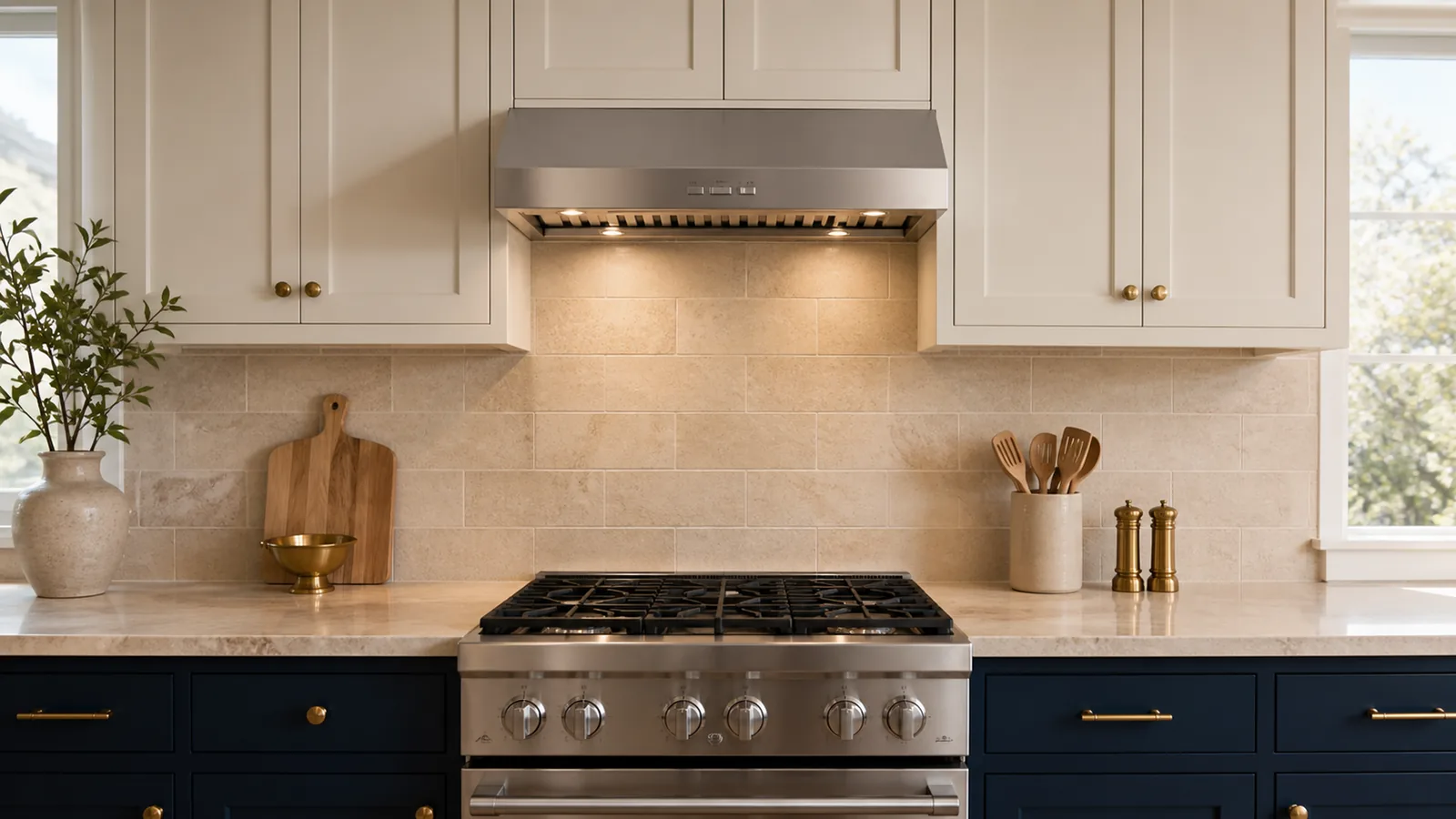
This guide compares seven current models for different kitchen situations—from a straightforward under-cabinet replacement to a custom insert and a true ductless option. We evaluated published manufacturer specifications and installation documents; we did not physically test these products. Prices, star ratings, owner-review scores and retailer rankings were not used to choose the winners.
The quick answer
Hauslane UC-PS18
Broan GLA2303SS
Whirlpool WVW53UC0LS
Zephyr Typhoon AK2100CS
FOTILE JQG7505
Faber Inca Pro Plus INPL3019SSNB-B
Broan BUEZ130SS
How we selected these range hoods
Each finalist had to be identifiable by an exact 30-inch model number and have enough primary documentation to evaluate its mount type, venting path, airflow claim, noise disclosure, filters, dimensions, controls and installation limits. We favored models that solve genuinely different problems rather than filling the list with near-duplicates.
We also distinguished open-air or “equivalent” blower claims from certified or laboratory airflow when the manufacturer published both. Those figures are not automatically interchangeable. Real installed performance depends on duct diameter, length, elbows, termination, filters and pressure losses.
Selection criteria
- Fit and installation clarity: exact dimensions, duct outlet and mounting documentation.
- Ventilation suitability: credible airflow information relative to light, everyday or smoke-heavy cooking.
- Capture and coverage: hood depth and configuration appropriate to a standard 30-inch cooking surface.
- Usability: useful speed range, lighting, accessible filters and controls.
- Maintenance: washable grease filtration or clearly replaceable charcoal filtration.
- Availability and support: current documentation, warranty and plausible U.S. purchase path.
We eliminated the Broan BCSQ130SS and BCDF130SS after Broan marked them discontinued and named a replacement. We also left out models whose documentation was too thin, whose exact status was uncertain, or whose role duplicated a stronger finalist.
30-inch range hood comparison
| Model | Best for | Published airflow | Mount / venting | Noise disclosure | Key limitation |
|---|---|---|---|---|---|
| Hauslane UC-PS18 | Flexible ducted replacement | 500 laboratory CFM; 860 equivalent | Under-cabinet; 3-way ducted | 1.5–7 sones | No recirculation |
| Broan GLA2303SS | Mainstream everyday kitchen | 350 max blower CFM | Under-cabinet; top/rear or optional recirculation | 1.5 sones at working speed | Charcoal filters separate |
| Whirlpool WVW53UC0LS | Clean wall-mount installation | 400 motor class; 350 HVI high vertical | Wall canopy; 6-in. top duct or optional recirculation | 7.5 sones high; 44 dBA low in related spec | Top vertical duct only when vented |
| Zephyr Typhoon AK2100CS | High-airflow under-cabinet hood | 250–850 CFM; ACT limits at 390/290 | Under-cabinet; 7-in. round or 3¼ × 10-in. duct | 0.9–5 sones | No recirculating option |
| FOTILE JQG7505 | Smoke-heavy cooking | 220/410/520/580 HVI CFM; 1000 equivalent | Under-cabinet/wall; 6-in. top duct | 1.2–7.5 sones | Large, tall body; vertical duct only |
| Faber INPL3019SSNB-B | Custom wood hood | Choose separate 300–1200 CFM blower | 30×19-in. insert; ducted | Depends on selected blower | Blower is not included |
| Broan BUEZ130SS | Kitchen with no duct path | Not HVI rated | Under-cabinet; non-ducted only | 3.5 sones | Cannot remove heat or moisture outdoors |
Published values are manufacturer figures under different test or reporting conventions. Do not rank products by the largest number alone.
The best 30-inch range hoods by kitchen type
Hauslane UC-PS18
The UC-PS18 is the most adaptable choice when an existing under-cabinet opening already has ductwork but the outlet direction is uncertain. It supports a 6-inch round top outlet, a 3¼-by-10-inch rectangular top outlet, or a rear rectangular outlet. That flexibility can matter more than a headline airflow figure in a real replacement project.
Hauslane also publishes an 860 “equivalent airflow” figure. We use the 500 laboratory figure for the more conservative comparison. The 22-inch depth offers useful coverage, but measure cabinet depth and head clearance carefully.
Broan GLA2303SS
This Glacier-series model is a sensible everyday choice when serviceability, familiar dimensions and convertible installation matter more than maximum output. It is 30 inches wide, just under 20 inches deep, and can vent vertically or horizontally through common duct sizes. Optional charcoal filters allow recirculation when exterior venting is impossible.
The 350-CFM number is a max-blower value rather than a universal installed result. Its modest capacity is better matched to light or everyday cooking and a reasonably direct duct run than to a high-output gas range used for frequent searing.
Whirlpool WVW53UC0LS
The Whirlpool is the clearest fit here for a kitchen with no cabinet above the cooking surface. Its chimney-style canopy is 30 inches wide and uses a 6-inch round top outlet. Whirlpool lists a 400-CFM motor class and 350 HVI CFM at high speed with vertical ducting, a useful distinction that makes the comparison more transparent.
Check ceiling height and chimney-extension needs before ordering. The relatively shallow 17.9-inch depth also makes proper mounting height and alignment important for front-burner capture.
Zephyr Typhoon AK2100CS
The current stainless-steel 30-inch Typhoon combines a published 250–850 CFM range with six speeds and Zephyr’s Airflow Control Technology, which can permanently limit maximum output to 390 or 290 CFM where a lower cap better suits the system design. That makes it unusually flexible for homeowners balancing strong capture with code or makeup-air planning.
High airflow still requires a compatible duct and makeup-air evaluation. With ACT enabled, Zephyr specifies three speeds at the 390-CFM limit and two at the 290-CFM limit. The self-cleaning system uses removable residue cups, but it does not eliminate routine cleaning, and the hood cannot recirculate.
FOTILE JQG7505
FOTILE’s side-draft design places a large capture opening close to the cooking plume. It is the specialist choice for frequent wok cooking, frying or searing when the kitchen can accommodate its tall 17 7/16-inch body and a 6-inch vertical duct.
The 1000-CFM figure is labeled as maximum equivalent airflow; the HVI-certified high figure is 580 CFM. We use the HVI value when comparing it with conventional hoods. Motion control and an oil cup add convenience, but the distinctive format occupies more wall space than a slim under-cabinet hood.
Faber Inca Pro Plus INPL3019SSNB-B
The 30-by-19-inch Inca Pro Plus is not a complete plug-and-play hood. It is a stainless insert for a properly designed custom enclosure, and its blower is selected separately. That is precisely why it belongs here: it lets a remodeler coordinate the visible wood or plaster hood with an internal, inline or remote blower suited to the project.
Do not treat the widest blower range as permission to choose by CFM alone. The enclosure, liner clearances, duct size, controls and blower compatibility must be planned as one system.
Broan BUEZ130SS
If the kitchen truly has no practical route outdoors, the BUEZ130SS is a simple non-ducted hood with a combination grease-charcoal filter, two fan speeds and one-person mounting brackets. Its advantage is not ventilation power; it is clarity. Broan identifies it as non-ducted only and includes the appropriate filter rather than presenting recirculation as an afterthought.
A recirculating hood can trap some grease and reduce some odors, but it does not exhaust heat, steam or combustion by-products outdoors. Replace the charcoal filter on the manufacturer’s schedule and do not expect ducted performance.
How to choose the right 30-inch hood
Decision 1: match the mount
Choose under-cabinet; confirm height and outlet location.
Choose a wall canopy; measure ceiling and chimney range.
Choose an insert; design the liner, blower and duct together.
Measure the actual opening
“30-inch” is a market size, not a guarantee that every product is exactly 30 inches wide. The Hauslane is 29¾ inches and the FOTILE is 29⅞ inches, while the custom Faber insert requires an enclosure built around its cutout and clearance rules. Record the width, depth, available height, distance to the cooking surface and location of framing, electrical service and ductwork.
Decision 2: identify the vent path
Best opportunity for useful delivered airflow.
Expect more resistance; follow the duct-sizing chart.
Use a recirculating model knowingly; it will not remove heat or moisture.
Compare airflow honestly
Manufacturers may publish max blower, motor class, laboratory, equivalent or HVI-certified CFM. These describe different conditions. A larger open-air number does not guarantee better installed capture than a well-designed hood with a correct duct. Use the most comparable certified or laboratory number available and read the footnotes.
Decision 3: match capacity to the kitchen
Boiling, reheating and occasional sautéing may suit a mainstream hood.
Prioritize coverage, a useful speed range and an efficient outdoor duct.
Searing, frying and wok cooking benefit from stronger capture and careful makeup-air planning.
Consider noise at a usable speed
Noise figures may describe low, working or high speed. A very quiet low-speed number says little about sound at maximum airflow. Compare the stated condition and remember that restrictive ductwork can increase turbulence. A hood you will actually run at an effective setting is more useful than a powerful hood you avoid because of noise.
Plan for makeup air and combustion safety
Makeup air may be required depending on exhaust capacity, combustion appliances, the adopted code edition, local amendments and the system design. A 400-CFM threshold is not a universal automatic rule for every U.S. home. Ask the permit authority and a qualified HVAC professional before finalizing a high-capacity system, particularly in a tight house or one with naturally vented combustion appliances.
Pre-purchase installation checklist
If the existing duct is still uncertain, review the range hood duct size guide before ordering; it explains 6-, 8-, and 10-inch configurations, reducers, elbows, and remodel constraints.
Write these down before ordering
- Exact cooking-surface width
- Available hood width and depth
- Manufacturer-required mounting height
- Cabinet or ceiling height
- Top or rear outlet location
- Existing duct shape and diameter
- Duct length and elbows
- Outdoor termination location
- Electrical connection type
- Gas or electric cooking
- Total gas input if relevant
- Makeup-air/code review
- Filter type and replacement access
- Chimney or recirculation kit needed
- Who will install and inspect it
Never reduce the duct below the manufacturer’s permitted size simply to fit an existing opening. Do not terminate a range hood in an attic, wall cavity, crawlspace or garage. Follow the product manual, appliance-clearance requirements and local code.
Not sure how much airflow to target?
Estimate the HVI reference values, gas-output guideline and planning factors before comparing models.
Use the range hood CFM calculatorFrequently asked questions
Should a range hood be exactly the same width as the range?
A 30-inch hood is a common match for a 30-inch range, but wider coverage can improve capture when the layout permits. Follow the range and hood manufacturers’ clearances and cabinet requirements.
Is 400 CFM enough for a 30-inch range?
It can be appropriate for many everyday kitchens, but the answer depends on cooking intensity, hood coverage, gas input, duct losses and local requirements. Use the sizing guide as a starting point, not a substitute for the product manual or professional design.
Is an 850 or 1000 CFM hood always better?
No. Larger published figures may use different test conventions, and high airflow can introduce noise, duct and makeup-air requirements. Capture geometry and a correct installation often matter more than the largest number.
Can I use a ductless hood over a gas range?
A ductless hood does not exhaust heat, moisture or combustion by-products outdoors. Consult the cooking-appliance instructions and local requirements; outdoor venting is generally the stronger ventilation approach where feasible.
Are baffle filters better than mesh filters?
Both can be effective when sized and maintained properly. Stainless baffles are durable and often dishwasher-safe; mesh filters can be lighter and lower-profile. Cleaning access and replacement availability are as important as the style.
How often should range hood filters be cleaned?
Follow the manufacturer’s schedule and adjust for how often and how heavily you cook. Grease filters need recurring cleaning; charcoal filters are replaced rather than washed unless the manufacturer explicitly says otherwise.
Primary sources and editorial disclosure
This article was researched from the official manufacturer pages and technical documents linked in each recommendation. Specifications and availability can change; confirm the exact model and current manual before purchase or installation.
Editorial disclosure: Larmine did not physically test these range hoods and has not ranked them from personal use. Recommendations are based on documented specifications, installation flexibility, use-case fit, maintenance, warranty and current U.S. availability. This article currently contains no affiliate links. If affiliate links are added later, they will not change our selection criteria or the price you pay.
Continue exploring the Larmine Kitchen hub for planning and improvement guides.